
 Українська
 Русский
Astrology
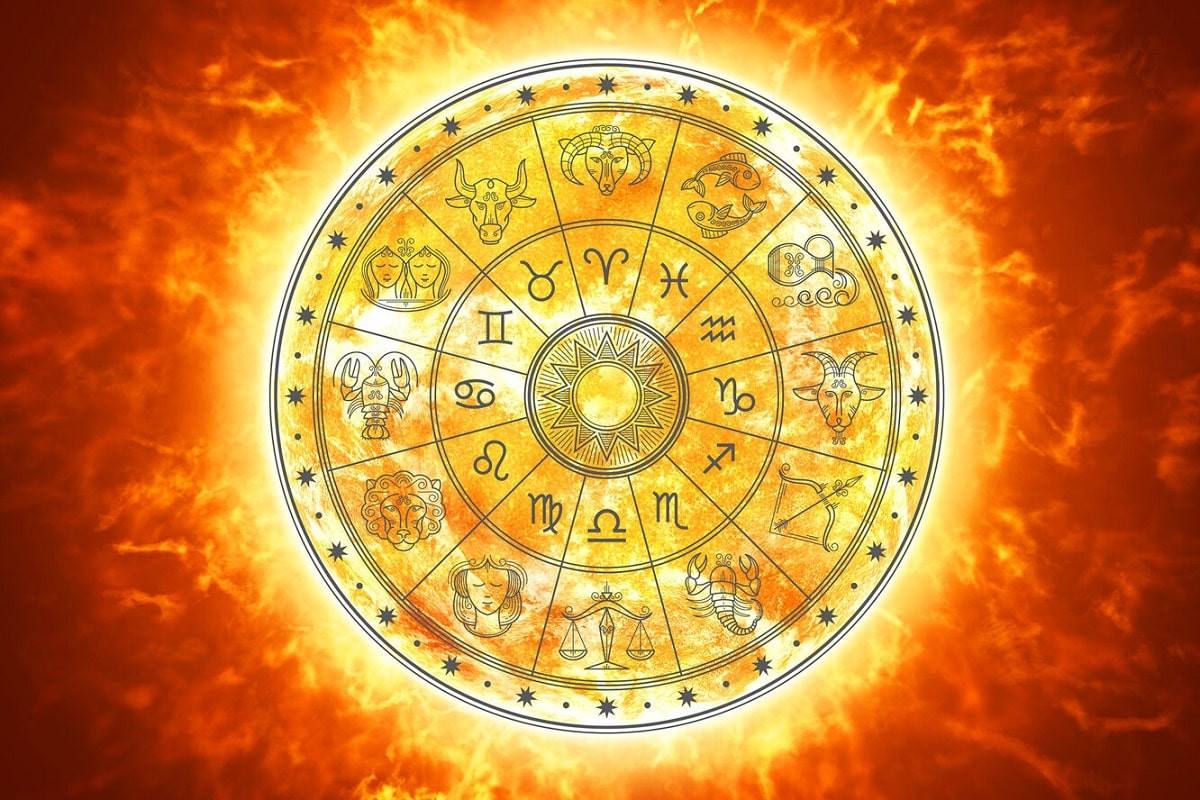
And likewise, science is related to space and time on Earth – this is the Chinese astrology of Baji.
Vedic Jyotish astrology is the traditional astrology of India, which originated earlier than 3000 years BC. e. It is based on the sacred writings – the Vedas – the most ancient sources of wisdom.
Vedic astrology, like the science of yoga, was discovered through the insight of the great Rishi sages who lived in the Satya Yuga – the age of light and truth.
They were called the Family of Wise Men and were identified with the stars of the Big Dipper and the Pleiades.
The word-of-mouth truths were eventually written down, resulting in the Brihat-Parashara-Hora Shastra, which today remains the main book of Vedic astrologers.
‘Jyotish’ literally translates to ‘Light of God’ and a Jyotishi is one who carries that light.
The task of Jyotish is to help man understand his nature and God’s will for his destiny.
Applying the science of Jyotisha (Vedic Astrology) reduces people’s fear of uncertainty, uncertainty and anxiety about the future.
Jyotish will tell you how to confidently sail the ocean of life, to realize your purpose and our eternal true “I”.
Concepts in Jyotish Astrology
Jyotish comes from Vedas, Vedas are written in Sanskrit, Vedic Astrologers use Sanskrit terminology.
Such concepts as “planets”, signs, houses – this was used as a simplification in the minds of people.
9 beans – 9 “planet”
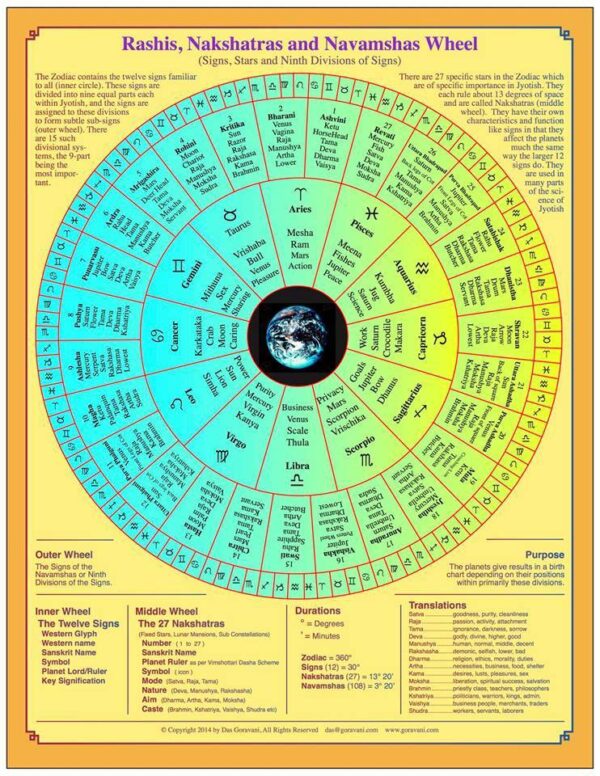
12 rashis – 12 constellations
12 bhavas – 12 houses / spheres
27 nakshatras – 27 lunar stops (2-3 stops for 1 constellation)
Drishti – aspects, compounds, yogas from grahas (planets)
Wargs are small cards
(16 additional cards named D2, D3, D8, etc.)
- Surya – Sun
- Chandra is the Moon
- Mangala – Mars
- Shukra – Venus
- Budha is Mercury
- Guru is Jupiter
- Shani is Saturn
- Rahu – Rahu
- Leave — Leave
- Misha is an Aries
- Vrishabha – Taurus
- Mithuna – Gemini
- Karka – Cancer
- Sinha – Leo
- Kanya – Virgo
- Tula – Libra
- Vrischika is a Scorpio
- Dhanu is Sagittarius
- Makara – Capricorn
- Kumbha – Aquarius
- Mina is Pisces
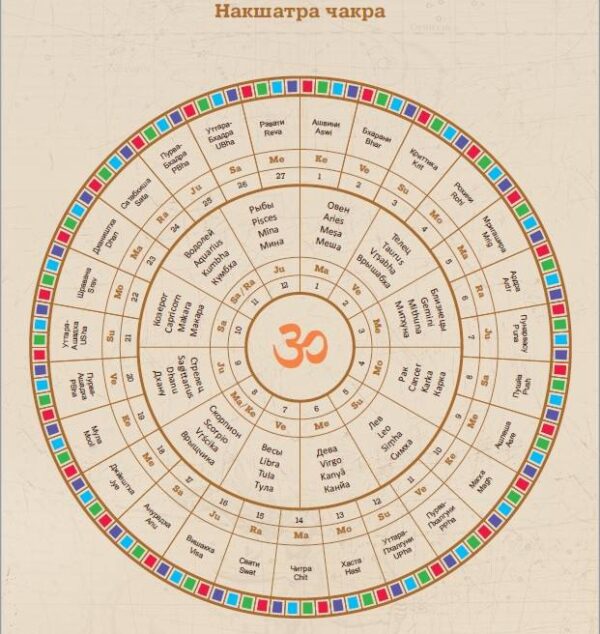
Each lunar station symbolizes one of the beautiful wives of the Moon God – Chandra. According to Vedic astrology, Chandra visits the house of each of his 27 wives for one day. Dynamic movement occurs every lunar day when the Moon moves to the next station. That is why every day has a special energy potential, character and charisma.
Nakshatras, its deep component and influencing forces.
This is where the secret lies, why each of our days differs from each other in emotional and energetic layers.
The Moon’s contact with the 27 Nakshatras creates a variety of situations and actions related to different areas of our lives. Each of us stops together with Chandra in one of the lunar parking lots and immerses himself in the energy flow of one or another Nakshatra. It is very difficult to completely predict or follow the rules here, but it is quite possible to predict the approximate course of events, the psychological state, based on the environment in which the Nakshatra immerses us.
And now, with Chandra’s secret, you can plan, like the Moon God, each of your new days. The practice of planning through the Nakshatras is considered one of the oldest tools in the tradition of astrology, predating the reading of signs.
Since ancient times, astrologers, when making a forecast for each day, manually calculated what day it is today and the Nakshatra associated with it, went to temples and looked at calendars.
It is possible to calculate the Nakshatra of the day using programs, calculators and calendars that are freely available on the Internet.
The moon takes approximately 27 days and 7 hours to orbit the zodiac.
There are two ways to round this number.
Either down to 27 or down to 28.
- with 27 nakshatras
- of 28 nakshatras
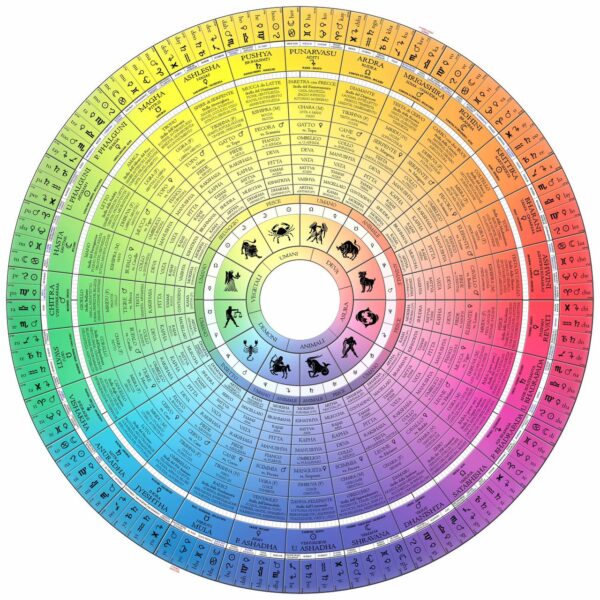
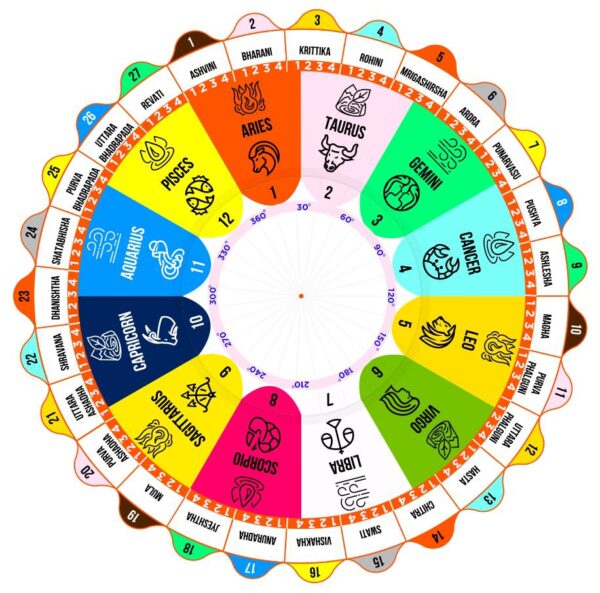
If the whole 360° zodiac is divided into 27 equal parts by the scheme of 27 nakshatras, each will be 13°20′. In the scheme of 27 nakshatras, each nakshatra is allocated equal parts of 13°20′, distributed across the zodiac, starting from 0° Aries from the Ashwini nakshatra.
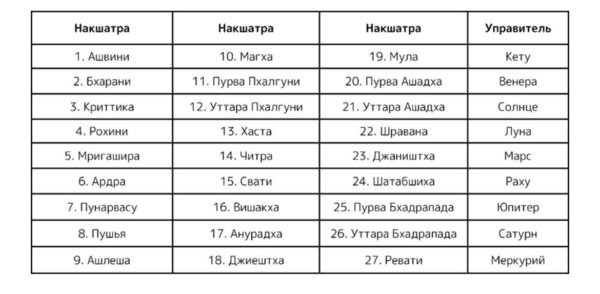
- Ashwini, 00*00′ – 13*20′ Aries, patron planet: Ketu — Read more
- Bharani, 13*20′ – 26*40′ Aries, patron planet: Venus — Read more
- Criticism, 26*40′ Aries – 10*00′ Taurus, patron planet: Sun — Read more
- Rohini, 10*00′ – 23*20′ Taurus, patron planet: Moon — Read more
- Mrigashira, 23*20′ Taurus – 6*40′, Gemini’s patron planet: Mars — Read more
- Ardra, 6*40′ – 20*00′ Gemini, patron planet: Rahu — Read more
- Punarvasu, 20*00′ Gemini – 3*20′ Cancer, patron planet: Jupiter — Read more
- Pushya, 3*20′ – 16*40′ Cancer, patron planet: Saturn — Read more
- Ashlesha, 16*40′ – 30*00′ Cancer, patron planet: Mercury — Read more
- Magha, 0*00′ – 13*20′ Leo, patron planet: Ketu — Read more
- Purva Phalguni, 13*20′ – 26*40′ Leo, patron planet: Venus — Read more
- Uttara Phalguni, 26*40′ Leo – 10*00′ Virgo, patron planet: Sun — Read more
- Hasta, 10*00′ – 23*20′ Virgo, patron planet: Moon — Read more
- Chitra, 23*20′ Virgo – 6*40′ Libra, patron planet: Mars — Read more
- Swati, 6*40′ – 20*00′ Libra, patron planet: Rahu — Read more
- Vishakha, 20*00′ Libra – 3*20′ Scorpio, patron planet: Jupiter — Read more
- Anuradha, 3*20′ – 16*40′ Scorpio, patron planet: Saturn — Read more
- Jyeshtha, 16*40′ – 30*00′ Scorpio, patron planet: Mercury — Read more
- Mule, 0*00′ – 13*20′ Sagittarius, patron planet: Ketu — Read more
- Purva Ashadha, 13*20′ – 26*40′ Sagittarius, patron planet: Venus — Read more
- Uttara Ashadha, 26 * 40 ‘Sagittarius – 10 * 00’ Capricorn, patron planet: Sun— Read more
- Shravana, 10*00′ – 23*20′ Capricorn, patron planet: Moon — Read more
- Dhanishtha, 23*20′ Capricorn – 6*40′ Aquarius, patron planet: Mars — Read more
- Shatabhisha, 6*40′ – 20*00′ Aquarius, patron planet: Rahu — Read more
- Purva Bhadra, 20*00′ Aquarius – 3*20′ Pisces, patron planet: Jupiter — Read more
- Uttara Bhadra, 3*20′ – 16*40′ Pisces, patron planet: Saturn— Read more
- Revati, 16*40′ – 30*00′ Pisces, patron planet: Mercury — Read more
- Ketu (Ashwini, Magha, Mula)
- Venus (Bharani, Purva-Phalguni, Purva-Ashadha)
- Sun (Krittika, Uttara-Phalguni, Uttara-Ashadha)
- Moon (Rohini, Hasta, Sravana)
- Mars (Mrigashira, Chitra, Dhanishtha)
- Rahu (Ardra, Swati, Satabhisha)
- Jupiter (Punarvasu, Vishakha, Purva-Bhadra-Pada)
- Saturn (Pusha, Anuradha, Uttara-Bhadra-Pada)
- Mercury (Ashlesha, Jyeshtha, Revathi)
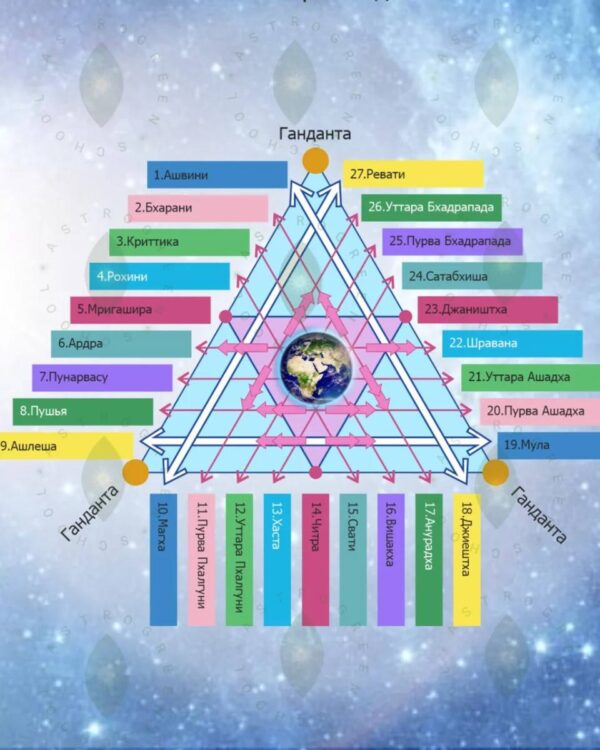
Divine Nakshatras – (Virgo Gana) – Ashwini (1), Mrigashira (5), Punarvasu (7), Pushya (8), Hasta (13), Swati (15), Anuradha (17), Sravana (22), Revati ( 27).
Earth Nakshatra – (Manusha Gana) – Bharani(2), Rohini(4), Ardra(6), Purva-Phalguni(11), Uttara-Phalguni(12), Purva-Ashadha(20), UttaraAshadha(21), Purva Bhadra(21) 25), Uttara-Bhadrapada (26).
Demonic Nakshatras – (Rakshasa Gana) – Krittika (3), Ashlesha (9), Magha (10), Chitra (14), Vishakha (16), Jeshtha (18), Moola (19), Dhanishtha (23), Shatabhisha ( 24).
Three ghanas are important when selecting compatibility in marriage and cooperation.
Properties of nakshatras:
A nakshatra has characteristics that can be divided into seven groups:
During the transit of the Moon in the nakshtar of each of the 7 groups, it is most favorable to engage in the following activities:
1 group:
Light or fast lunar constellations: Ashwini-1, Pushya-8, Hasta-13 They contribute to trade, quick circulation of funds, starting a business or production, receiving short-term pleasures from changes or changes in activity (especially at work), decorating, wearing jewelry , playing sports, communicating, borrowing money or anything else, taking medication, starting treatment, business trips and short trips.
It is favorable to do things that require skill and craftsmanship: jewelry, carpentry, plumbing, and many others. You can start training, designed for a short time or another stage of longer training. This time is also favorable for spiritual searches and changes. Do NOT start things that require a lot of time and stability.
2nd group:
Nakshatras of fixed nature Rohini-4, Uttara Phalguni-12, Uttara Ashadha-21, Uttara Bhadrapada-26 Suitable for all affairs in which you want to achieve constancy and stability. It is favorable to start long-term projects, lay the foundations of various buildings, move into a new house, establish relationships with people and take up a position, start a career, enter into long-term contracts, make promises and oaths. Also good for drilling wells, designing, founding and building cities, factories, houses, temples, planting trees, buying land and real estate, noble deeds, performing coronations (significant ceremonies), erecting statues of Deities and other long-term activities. A fixed nakshatra does not favor the implementation of quick affairs, designed for a quick result and buying cars.
3rd group:
Fierce or Terrible Nakshatras: Bharani-2, Magha-10, Purva Phalguni11, Purva Ashadha-20, Purva Bhadrapada-25 Can bring destruction, loss and grief in their periods. They promote deception, apparitions, and evil deeds. Responsible cases initiated at this time often damage a person’s reputation or end in imprisonment. Conspiracies, trials, arson and fires, poisoning, accidents, conflicts and battles, destruction and acts of cruelty – these are the things that the present time favors. On the other hand, activities involving risk to life, weapons, explosives, dangerous or poisonous chemical compounds, fire and the like can be done at this time. Demolition of buildings, military exercises, cutting or uprooting of trees, removal of rubbish, blasting of rock in the construction or mining industries, and other similar activities may be carried out according to the influence of time. Prudence and caution, along with protective spiritual practices, will help you get through this time with minimal stress. You should not start any good deeds in the meantime, and even everything that is calculated to have a lasting effect.
4 group:
Mixed nakshatras combine the influence of sharp and soft stars Kritika-3, Vyshakha-16 Having a mixed nature, they can contribute to many things from the lists. But in the meantime, it is best to carry out domestic relations that are repeated day by day, daily or professional duties. During the period of validity of these lunar stations (nakshatras), new responsible affairs should not be started.
5 group:
Soft constellations Mrigashira-5, Chitra-14, Anuradha-17, Revati-27 Favorable for peaceful and creative actions. It is good to engage in arts, dancing, music, singing, marrying, begetting children, conducting daily ceremonies, learning various sciences, wearing new clothes, jewelry, making acquaintances, obtaining various sensual pleasures, arranging processions, festivals, planning and carrying out peaceful affairs. and travel as a tourist. Soft constellations are not favorable for actions related to anger, aggression or violence.
6 group:
Sharp (hard, sharp, irritating) nakshatras Ardra-6, Ashlesha-9, Jyeshta-18, Mula-19 Influence purposeful volitional activity, manifestations of aggression, rage or violence, military and offensive actions, the task of defeating enemies, overcoming the gap alliance or coercion, vandalism, sorcery, spells and hypnosis, relations with the other world and spirits, punishment, detention, breaking of relations or social ties, separation from friends and loved ones, dismissal from work.
At present, unfortunately, it does not contribute to matters that require a peaceful state, it is not recommended to make trips, large purchases and other important everyday undertakings. Prudence and vigilance will help to avoid many troubles.
7 group:
Movable constellations Punarvasu-7, Swati-15, Shravana-22, Dhanishta-23, Satabisha-24 Contribute to fast-moving, intense and temporary affairs. During this period, it is good to carry out activities designed for the short term or quick changes. You can buy vehicles, hold meetings, plans and training, change jobs or activities, visit, move from one home to another, make short trips and trips, engage in gardening, repairs and household chores, start treatment, conduct processions, to carry out logistics and sales. You should NOT start things that require long-term efforts and are calculated for a long-term result.
There is a legend according to which Shiva, having heard that the sage Bhrigu lives in the world, who is able to see everything in his meditation, came to him and asked him to tell what his wife Parvati was doing. Bhrigu Muni entered into meditation and saw a naked Parvati taking ablution. Arriving home, Shiva told Parvati about everything, at which she got angry and cursed Bhriga and all the seers (including astrologers) so that from now on all their prophecies would be only half true. In this regard, true predictions can be given only by a person who leads a pious, spiritual life, whose connection with higher forces would protect him from Parvati’s curse. In order to become a guide of the Divine Light, it is necessary to maintain purity on all levels: physical, mental and spiritual.
The astrological chart reflects the manifestation of our subconscious in the current incarnation.
That is, looking at the natal chart, the astrologer sees those seals on our mental and physical bodies that we brought from past incarnations – samskaras. Gathering together, samskaras develop into desires (vasanas), and vasanas cause fluctuations in the mind, that is, bretis, which in turn shape worldviews and create new karma.
- sanchita-karma – the sum of all past actions;
- prarabdha-karma – karma for this life (ripened karma);
- kriyamana-karma – totality of current actions;
- agama-karma is the karma of the future.
The location of the heavenly bodies in the birth chart indicates what a person should work on in this incarnation (prarabdha-karma) and is an indicator of the evolution of our inner essence in its journey through life. Thus, the planets can both lift us up and pull us down, depending on our level of understanding of the energy laws of the cosmos. The more narrowed our consciousness, the harder karma will be tolerated. However, you should not take the position of the planets as a sentence, but rather use your map as a gate that leads to cosmic life. After all, our consciousness is in the prison of the physical body and this conditioned world, and being aware of the influence of the planets, a person can go beyond the limits of conditioning and gain freedom. The purpose of Vedic astrology is not to make us feel dependent on external forces, but to help reveal the potential of our soul.
CHINESE ASTROLOGY BAZI
Translated from Chinese, this word means “eight characters”.
We are talking about hieroglyphs describing the date of birth – it is believed that the fate of a person is encoded in them. In everyone’s map, the hieroglyphs are arranged in four columns – or pillars – that indicate the year, month, day and hour of a person’s birth. Actually, the full name of the prediction system – “Bazi Xuanmin” – means “eight characters for calculating life and fate”.
Baji’s predictions have been used by the Chinese nobility since ancient times, and this science was a “secret” for a long time. Legend has it that after the Chinese Revolution, Mao Zedong banned Bazi and banished the sages from the country.
They settled in Hong Kong and Singapore, where feng shui schools are traditionally strong today.
Feng Shui is one of the important parts of Chinese traditional human sciences.
It also includes Chinese medicine, the science of calculating strategies (Qi Men Du Jia) and much more.
But in the center is Bazzi, because it is the date of birth of a person that determines his place in the universe.
The Chinese believe that man is a part of nature. Like trees, rivers, clouds, rocks and wind. And a person is affected by the energies circulating in nature. Accordingly, the fate of a person is also described in terms of energies.
In Baza’s teaching, there are five types of energies – Wood, Fire, Earth, Metal and Water. Each energy has a sign: Yang is the male aspect and Yin is the female aspect.
In addition to the ten hieroglyphs of energies, Baza also has 12 seasons corresponding to 12 months. They are indicated by the names of animals. This is the “eastern horoscope” known to all of us
Deciphering the “eight hieroglyphs” of fate is a difficult and serious matter. Sometimes he is taught all his life. Each card is unique, as each individual person is unique. Even the cards of twins are different from each other. Individual deciphering of the knowledge imprisoned in the Bazzi map is available only to professionals.