
 Українська
 Русский
CHAKRAS
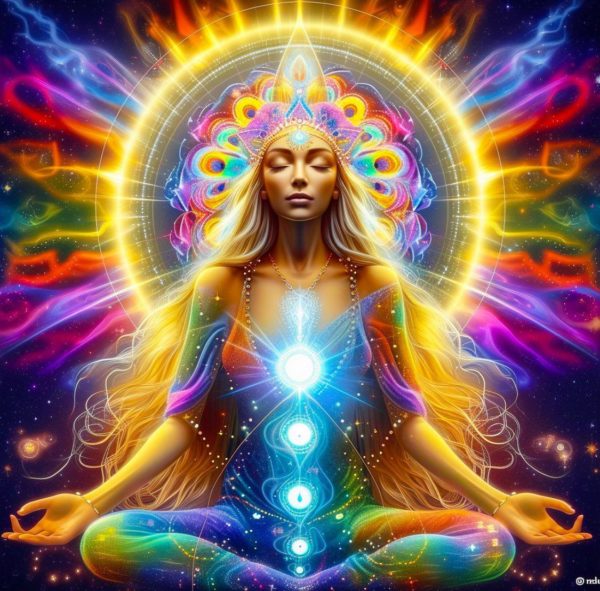
Chakras are the psycho-energetic centers of a person, which are the intersection of the channels through which the vital energy of a person flows. They are also called rotating vortices of energy passing along our spine.
Chakras can be seen as 114 central nodes of connection, or fusion, of nadis.
Nadis are channels of prana in the energy body.
These connections have the shape of a triangle. They are called chakras because they represent movement from one dimension to another, and the word “chakra” means “wheel” or “circle.” But actually they are triangles.
Of the 114 chakras, two are outside the physical body. Of the remaining 112, you can only work on 108 – then the remaining 4 will blossom as a result.
These 112 chakras are organized into 7 dimensions, each of which contains 16 aspects. Instead of delving into 112 (which is too much for most people),
it was only about the 7 chakras corresponding to the 7 dimensions. These 7 dimensions are called chakras, which, in turn, are the basis of 7 schools of Yoga.
From 112 to 7 chakras
For a full-fledged physical and social life, a person needs 21 activated chakras. These 21 chakras are also associated with the number 7.
Since energy is characterized by three dimensions of Pingala, Ida and Sushumna (central energy channels), there are 7 aggregates, in each of which 3 chakras function as a single unit.
Therefore, if the 21st chakra is functioning, you are physically, psychologically, and emotionally complete.
But in terms of energy, you are disabled.
If we want the other dimensions to become a living reality, the remaining chakras must also be activated.
The mind must be full of energy. Otherwise, dormant intelligence is not intelligence. A computer that does not turn on is still a piece of stone. It’s the same with the human body. It’s a supercomputer, but most people only keep it running at a survival level.
If we want something more to happen, it must be activated.
Hatha yoga is a discipline that activates the entire human system.
Unfortunately, people think that Hatha yoga is just exercise or some kind of health system. Yoga has never focused on healing anything. We consider how to make the human system complete. If the system is complete, everything else will also be fine. Something will be activated, which in any case will start the healing processes by itself.
Location and names of the 7 chakras
The 7 main chakras are known as:
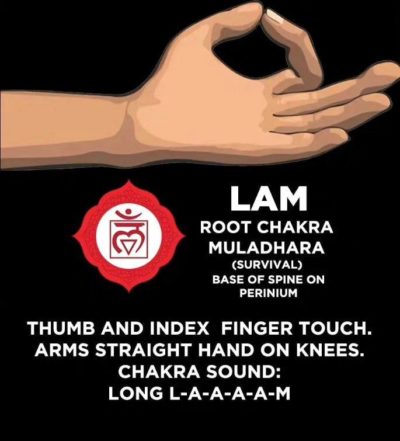
- Muladhara (located in the perineum – in the space between the anus and the genital organ),
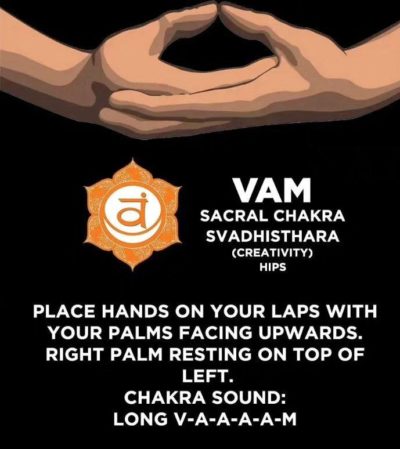
- Swadhishthana (located just above the genital organ),
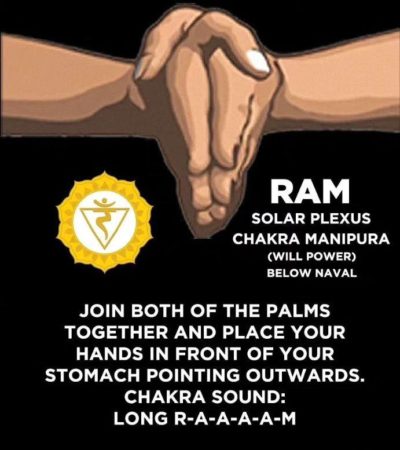
- Manipuraka (just below the navel),
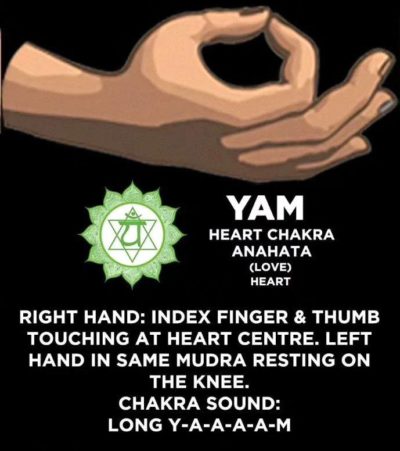
- Anahata (right below the junction of the ribs of the chest),
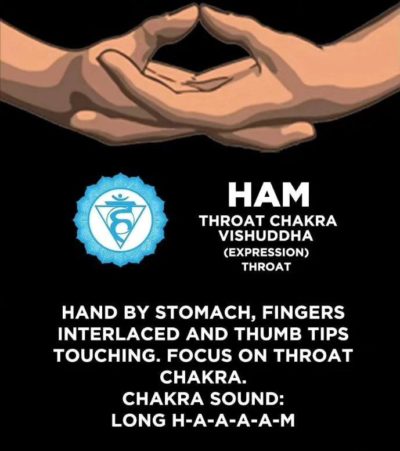
- Vishuddhi (in the area of the dimple at the base of the throat),
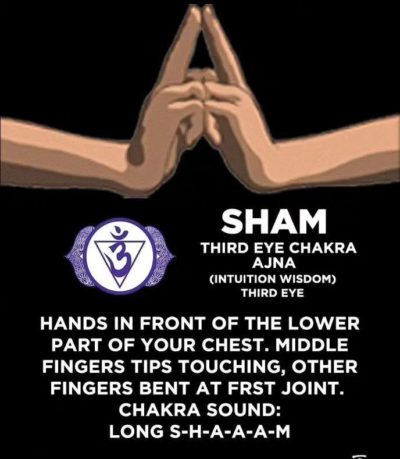
- Agna (between the eyebrows),
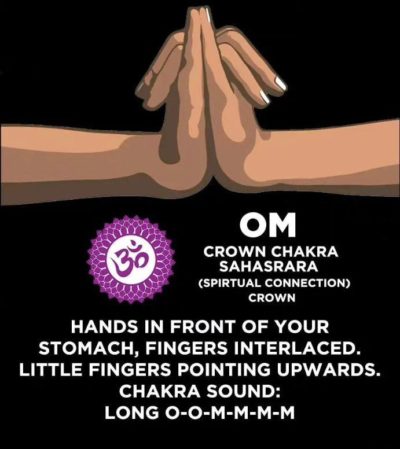
- Sahasrara (also known as Brahmarandra, which is on the top of the head, where a baby has a soft spot at birth).
This topic can be discussed in terms of the lower and upper energy centers, but this formulation is often misunderstood. It is like comparing the foundation of a building with its roof. The roof is absorbed into the foundation. The foundation plays a major role for the building than the roof. The quality, stability, safety and longevity of a building depends more on the foundation than on the roof. But from the point of view of language formulation, the roof is higher, the foundation is lower.
Subtle aspects of the 7 chakras of the body
Chakras find their embodiment in the body. But they also have subtler manifestations called “kshetras”.
Kshetra means abode. You can be in your office but live somewhere else. Similarly, there are external kshetras called bahya kshetras, and there are internal kshetras called antar kshetras.
Chakras have more than one dimension. One is physical existence, but chakras also have a spiritual dimension. This means that the chakras can be completely transformed.
CHAKRA SYMBOLISM
The first five main chakras correspond to fire, water, earth, ether and air. A yantra refers to the physical form of a chakra that has the petals of a lotus flower uniquely representing each chakra, surrounding them with a certain number of petals. A yantra, also known as a ‘machine’, helps depict the functions of the chakras.
The colors support the identity of each chakra symbol – the chakra system is organized by the colors of the rainbow, ascending from the spine.