
 Українська
 Русский
Meditations

Meditation is a combination of physical and mental practices that help you gain mental clarity, inner peace, and reduce stress.
In Western culture, the word comes from the Latin meditari, which means “to ponder”, “to contemplate”, “to consider”. Despite its origin as a religious practice, today meditation is not associated with esotericism and faith, but represents a scientifically proven technique for relieving tension, improving brain function and general well-being.
AdviceLearn more about Chakras:
Chakra meditationHow to meditate?
In mindfulness meditation, we learn to pay attention to the breath as it comes in and out, and notice when the mind wanders from this task.
This practice of returning to the breath builds the muscles of attention and
Attention
When we pay attention to our breath, we learn to come back and stay in the present moment – to intentionally ground ourselves in the here and now, without judgment.
The most important tools you can bring to your meditation practice are patience, some self-kindness, and a comfortable place to sit.
Five reasons to meditate:
- Understanding your pain
- Reduce stress
- Connect to the best
- Improve focus
- Reduce brain chatter
- Sit Find a place to sit that is calm and quiet for you.
- Set a time limit If you’re just starting out, it can help to choose a short time, such as five or 10 minutes.
- Pay attention to your body You can sit on a chair with your feet on the floor, you can sit freely with your legs crossed, you can sit in Padmasana. Just make sure you’re stable and in a position you can stay in for a while.
- Feel Your Breath Observe the sensation of your breath as it comes in and out.
- Notice when your mind wanders Inevitably, your attention will leave the breath and wander elsewhere. When you notice that your mind has wandered – for a few seconds, a minute, five minutes – just bring your attention back to your breath.
- Be kind to your wandering mind Don’t judge yourself or get bogged down by the content of the thoughts you’re lost in. Just come back.
- Close with Kindness When you are ready, gently look up (if your eyes are closed, open them). Take a moment and pay attention to any sounds in your environment. Notice how your body feels right now. Pay attention to your thoughts and emotions.
That’s all! This is practice. You focus your attention, your mind wanders, you bring it back, and you try to do it as kindly as possible as many times as you need to.
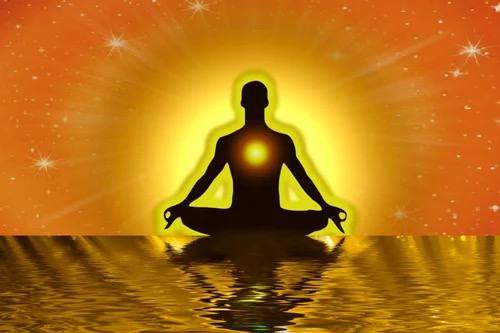
Meditation tips and techniques.
So far we’ve looked at basic breathing meditation, but there are other mindfulness techniques that use different focal points than the breath to fix our attention on – external objects like a sound in a room, or something broader like noticing spontaneous things, that come into your awareness during , but aimless wandering practice, all of these practices have one thing in common: we notice that our mind is running the show a lot of the time.
It’s true. We think thoughts, usually, and then act. But here are some helpful strategies to change that:
How to make mindfulness a habit?
It is estimated that 95% of our behavior occurs on autopilot. That’s because neural networks underlie all our habits, reducing our millions of sensory inputs per second into manageable shortcuts so we can function in this volatile world.
These default brain signals are so effective that they often cause us to repeat old behaviors before we remember what we meant to do instead.
Mindfulness is the exact opposite of these default processes. It is executive control, not autopilot, and allows for deliberate action, willpower, and decision making. But it takes practice. The more we activate the intentional brain, the stronger it becomes. Every time we do something intentional and new, we stimulate neuroplasticity by activating our gray matter, which is full of newly sprouted neurons that haven’t yet been primed for the brain’s autopilot.
Transcendental meditation
It is a simple practice of using words, sounds or short phrases as a personal mantra.
This practice is applied twice a day for 20 minutes in a sitting position with closed eyes. Thanks to this practice, you will be able to achieve inner peace, deep relaxation and rest without making any extra effort to concentrate.
The goal of Transcendental Meditation, which is a highly spiritual form of meditation, is to reach and ascend to a higher level of existence. Trainers who work with this meditative practice create an individual program of classes, while helping the person who practices this type of meditation with the definition of his personal mantra. A mantra can be a special thing that a person needs or needs to get rid of through spiritual experience and awareness, and it is always open to transformation in their consciousness. This allows you to gain experience on a deeply personal level.
Vipassana meditation
Meditation is aimed at transforming the mind through the development of such qualities as compassion and wisdom.
As a rule, in the process of meditation, the main attention is paid to breathing and awareness of changes that occur both in physical sensations and in the emotional state.
Although these two properties of meditation are not yet fully understood, this meditation practice can affect both the body and the mind through the techniques used in this type of meditation. Vipassana, an ancient form of Indian meditation, involves looking at life’s realities as they are, achieved by focusing attention on physical sensations in order to establish a strong connection between mind and body.
The 2,500-year-old meditative practice of Vipassana is also a precursor to mindfulness meditation, which has grown in effectiveness in recent years.
Shamatha meditation is a Buddhist practice that literally means “world”. The Buddha divided the effect of meditative practices on the mind into two types: vipassana and shamatha, that is, enlightenment and pacification.
For this reason, Vipassana and Shamatha form the single foundation of meditation.
Shamatha meditation is designed to balance and calm the mind.
This meditation practice is also helpful in relieving stress.
It frees the mind from the distracting effect of anxiety and panic using the technique of focusing attention on a specific object – most often concentrating on breathing.
Shamatha – the first phase of the Buddhist meditation tradition – was also the path to Vipassana. At the heart of this tradition was the belief that meditation, which forces the mind to focus on the present rather than the past or future, can lead to its transformation.
Chakra meditation
Chakra, which means “wheel” in Sanskrit, are the energy and spiritual power centers inside our body. It is believed that there are only seven chakras in the human body, and each of them is located in different parts of the body. Each chakra corresponds to its color. Meditation on the chakras aims to keep them open and fluid.
When the chakras are imbalanced or blocked by events and situations in the outer world, we cannot find peace in our inner world. But with chakra meditation you can achieve balance and strength within the chakras, and thus find a clearer and more alive mind. As for the technique of performing this practice, in the process of meditation of this type, visualization and presentation of chakras with their unique colors is used in one’s imagination.
Zen meditation
Another ancient Buddhist practice called Zen, also known as Zazen, aims to awaken the mind’s natural ability to grasp truth. In the process of meditation, you should sit straight. After taking a sitting position, you need to give your mind to yourself and focus on breathing. It is also necessary to consolidate and strengthen the sense of presence and concentration.
Zen meditation is usually practiced with a coach, as he knows the specific stages and postures for this type of meditation. These special requirements require a little more discipline and practice from you. Unlike other types of meditation, Zen meditation focuses not so much on breathing through the nose, but on diaphragmatic breathing and abdominal movements. If you are an experienced practitioner in the field of meditation and want to acquire a new spiritual experience, Zen meditation will be a good choice for you.