The eightdegrees of yoga are described , and they can be seen as a guide to how to live a full, happy life, helping a person to get closer to the spiritual aspects of nature.
1. The pit
A set of ethical norms of behavior that regulate our relationships with other people in a certain way.
It is also interpreted as a universal law, which boils down to the golden rule of morality: do not do to others as you would not want others to do to you.
A total of five pits are known:
- Aparigraha is not selfishness,
- Brahmacharya – moderation,
- Asteya is not a crime,
- Satya is truthfulness,
- Ahimsa is non-violence.
2. Niyama
Self-discipline, as well as the spiritual sphere as a whole. In fact, it manifests itself in regular visits to temples, personal meditation practices, contemplative walks, etc.
Five yums:
- Ishvara Pranidhana – Surrender to the mercy of God,
- Swadhyaya – the study of oneself and the study of sacred texts,
- Tapas is a religious aspiration and fervor,
- Samtosha is joy,
- Shaucha – purity.
3. Asana
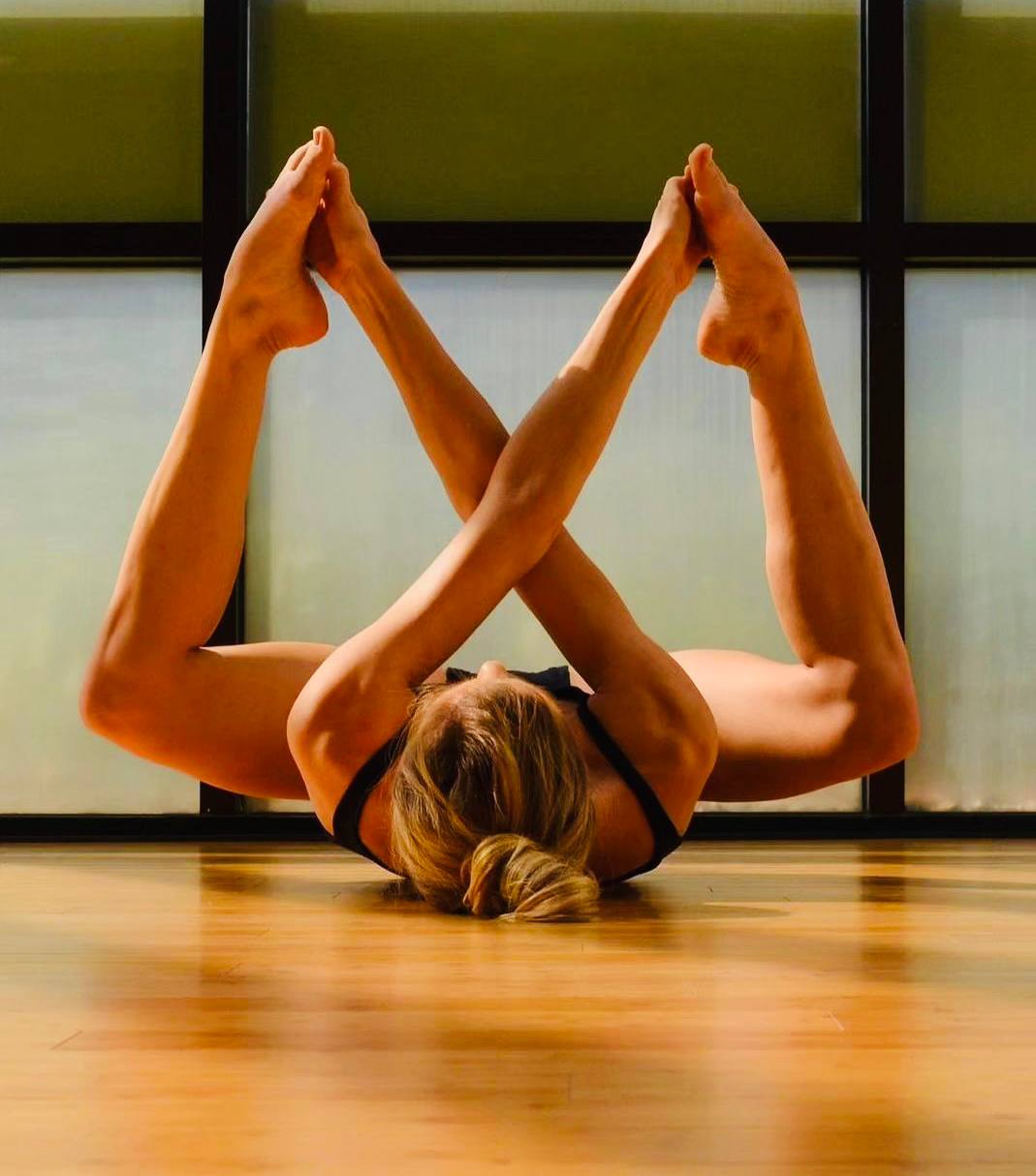
The so-called yoga poses.
The body is the temple of the soul, so taking care of it is an important stage of spiritual growth. Thanks to the practice of asanas, a person becomes more disciplined, his ability to concentrate improves.
Without them, meditation is impossible.
4. Pranayama
It is a system of techniques that teach control over breathing in the process of establishing a connection between it, mind and emotions. “Pranayama” is literally translated as “expansion of vital energy”. And this is quite natural, because practicing pranayama is a great way to rejuvenate the body and extend its life.
5. Pratyahara
Distraction from external objects. At this stage, a person directs his efforts to turn his consciousness towards himself and not to disturb his inner concentration. It is extremely important not to be distracted by external stimuli.
After the feelings stop wandering from one object to another, a person gets the opportunity to look at himself more closely, to consider those original attitudes that determine his life and interfere with inner growth.
6. Dharana
At the stage of pratyahara, conditions are created for mastering dharana – concentration.
The practice of concentration teaches slowing down the mental process by focusing on some mental object: a sound, a divine image, an energy center in the body, etc. It is assumed that in the process of mastering the previous three stages, a person has found certain skills of concentration.
However, in asana and pranayama, attention continues to wander, even though a person concentrates on his movements. At the stage of pratyahara, a person observes himself, while in dharna, attention is focused on one point.
7. Dhyana
Meditation (contemplation) is based on a continuous flow of concentration. Concentration (dharna) and meditation (dhyana) are not the same, there is a subtle difference between the two states.
Thus, an important condition of dharna is one-pointed attention, while dhyana – the state of awareness – does not involve such focus at all. At this stage, the mind is calm and serene, and therefore does not generate new thoughts. Achieving this state requires endurance and strength. Do not think that it is impossible. Remember that yoga is a process, that the inner journey is the most important.
8. Samadhi
At this stage, the meditating object completely merges, as a result of which a person overcomes the limits of his own “I”. He finally realizes the deep connection with the divine, the interconnectedness of all living beings.
A world that is “above all understanding” is coming. The meditator experiences true bliss and union with the world.
Achieving enlightenment requires endless devotion to practice.
Yoga tools
These are Pranayama, Bandhis, Mudras, Kriyas, Mantras and attention management techniques leading to a meditative state.
Asanas
Asanas, according to the sage Patanjali, the author of the Yoga Sutras of Patanjali, are “positions of the body that are comfortable and steady.” For many, this formulation causes a smile and questions, because many yoga poses require considerable strength and stretching to be performed and can hardly be called “comfortable”, and stability is not always achievable. This may be due to the fact that, as far as is known, very few basic asanas were used by yogis during the time of Patanjali. Thus, in “Hatha Yoga Pradipika” there is a list of 11 asanas for strengthening the body and 4 meditative asanas.
However, the first group includes poses that are not the most comfortable for modern people: Swastikasana, Gomukhasana, Virasana, Kurmasana, Kukutasana, Uttana Kurmasana, Dhanurasana, Matsyaasana, Pashimottanasana, Mayurasana, Shavasana.
To the second: Siddhasana, Padmasana, Simhasana, Bhadrasana.
Such a limited number of provisions was the result of a clear understanding that asanas are not an end in themselves, but a tool offered by yoga for the spiritual development of a person.
Pranayama
In the most general sense, pranayama is breath control. Breathing is a bridge between a person’s biological and spiritual nature. Type of breathing, intensity, depth, muscles involved in it, directly with the state of consciousness of a person. Breathing reflects our true emotional state. Conversely, by controlling your breathing, you can learn to control your emotional state. For the purpose of yoga, it is important that by consciously forming and maintaining a certain type of breathing, we aim to create and maintain the desired state of consciousness that we have chosen.
8 pranayams are described in “Hatha Yoga Pradipika”:
Surya Bheda, Ujjayi, Sitkari, Sitali, Bhastrika, Bhramari, Murchha, Plavini.
Bandhi
Bandha means “lock” in Sanskrit. This word fully conveys the essence of their influence. A bandha is an internal clamp designed to hold energy within certain areas of the body so that concentrated force can be used in a targeted manner.
When performing bandhas, we tense certain parts and hold them in this state. Organs, muscles, nerves and physical processes are subjected to massage, stimulation and obey the will of the practitioner. Bandhas also affect the mental (pranic) body. There is a redirection or even a stoppage of the currents of prana constantly flowing through our subtle body. The whole body and mind come to rest and become receptive to higher states of awareness.
In classical yoga, three main bandhas are distinguished: jalanadhara-bandha (throat lock, performed by tilting the head down, usually while holding the breath), uddiyana-bandha (middle lock, performed by retracting the abdominal muscles, usually together with the throat lock) and mula-bandha (lower ) is performed by squeezing the muscles of the perineum.
There is a practice of performing all three locks at the same time – maha-bandha.
Wise
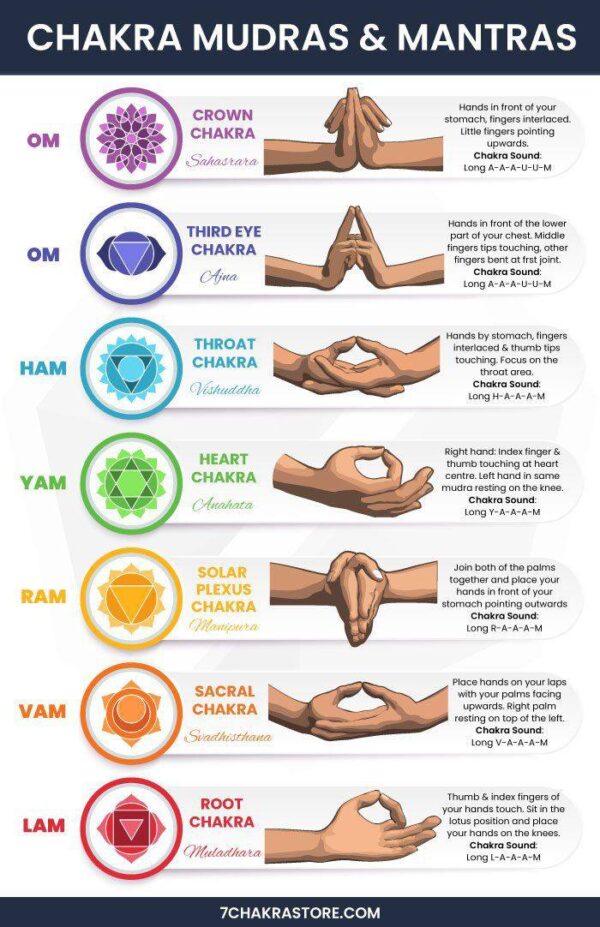
Usually, in the layman’s perception, mudras are understood as specific positions of the hands.
In classical yoga, the category of “mudra” is much broader: there are body positions: yoga-mudra, shaktichelani-mudra;
mudras also include special eye positions; sambhavi mudra, vaishnavi mudra,
speech-nabhi-mudra, khechari-mudra.
Mudras have a very subtle effect on the human body, mainly on his energy body, so mudras are often used in meditative practice, work with attention, and concentration.
Mantras
In Hinduism, a mantra is a form of speech that significantly affects the mind, emotions, and even external objects. Usually a mantra is a combination of several sounds or words in Sanskrit. At the same time, each word, syllable or even a separate sound of a mantra can have a deep spiritual meaning. Each mantra has its own characteristics, rhythm and influence. The combination of sounds, the frequency with which the body resonates and the rhythm of the mantra helps to reach a state of inner silence, harmony with one’s inner and infinite self.
Mantras contribute to the purification of consciousness, the acquisition of strength, clarity of mind, and pacification. There are different ways to work with mantras: listening and concentrating on these sounds, saying them loudly and clearly out loud, saying them in a whisper, saying them mentally.
Meditative practices
The word “meditation” means “to consider”, “to contemplate”, “to generate ideas”. Techniques of attention control and meditation in yoga are a kind of mental exercises and a special mental state that arises as a result of these exercises. At the moment, various sources define meditation as a special kind of in-depth reflection, for example, about spiritual truth, accompanied by distraction from external circumstances”, by the elimination of “all factors that distract attention, both external (sound, light) and internal (physical , emotional, intellectual tension)”; in other cases, meditation is defined as a state of inner concentration or as actions to achieve it; many understand it as an “altered state of consciousness” or even a “special trance state”. Meditation is not a changed, but rather our original, true state of contact with our “I”. There are many meditation and attention control techniques that teach us to first control the flow of thoughts and movements of attention, and then to slow and stop them, coming to a state of calmness and stillness. Practicing yoga and meditation as a part of it, we learn the most subtle contact with ourselves, understand peace and happiness of a new quality.
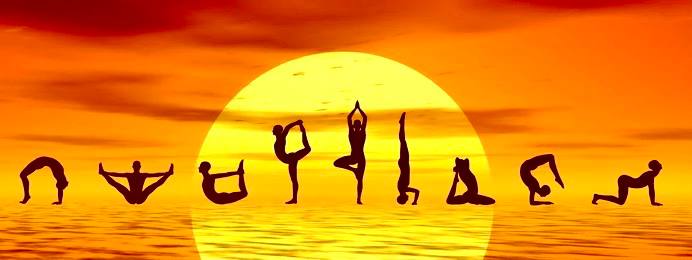
Surya Namaskar “Salutation to the Sun”
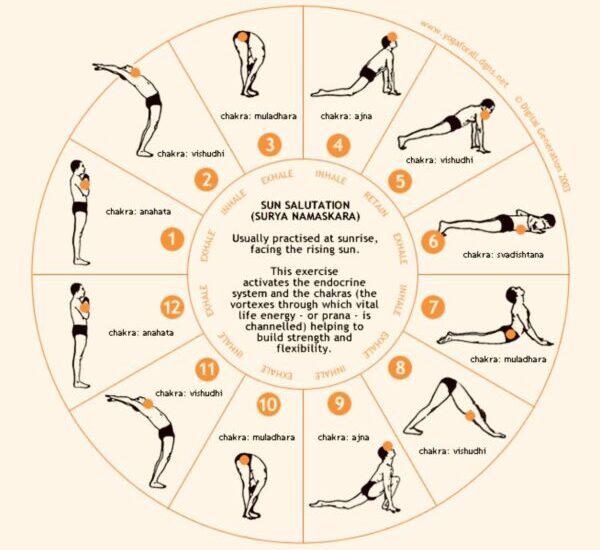
Surya-namaskara is one of the most popular and basic techniques of yoga, and one of the most used methods for maintaining health and an energetic active life.
The Vedas say that one who does Surya Namaskar daily will not know poverty for 1000 births. Especially if you wish everyone happiness during this set of exercises.
At the same time, this set of exercises is quite simple and at the same time extremely effective. Most of the yoga techniques available today are too difficult for the average person to learn and perform, and they only have a beneficial effect on certain areas of the body and mind. The practice of Surya Namaskar, in this regard, is the most optimal and effective set of exercises. It is almost a panacea for almost any person, despite the fact that it takes only 5-15 minutes a day to perform.
Surya Namaskar stretches, massages, stimulates and tones all major muscles, vital organs and parts. Among other things, this technique is a self-sufficient spiritual practice provided that it is performed meditatively and contemplatively.
The technique is a series of 12 asanas in which there are successive forward and backward bends that bend and stretch the spine and other parts of the body. If you find that your body is not flexible enough, the muscles are too tense and rigid, then you should start performing the complex in a slow leisurely rhythm, with maximum possible relaxation in each new position of the body.
Mantra.
Om Bhanave Namaha (Bow that gives Light)
Om Pushne Namaha (Obeisance to the Sustainer of All Around)
Om Ravaye Namaha (Bow that Brings Change)
Om Bhaskaraya Namaha (Bow emits brilliance)
Om Savitre Namaha (Obeisance to the cause of all living things)
Om Marichaye Namaha (Bow to the Radiant)
Om Adityaya Namaha (Obeisance to the Divine Light)
Om Khagaya Namaha (Obeisance that moves in the heavens)
Om Mitraya Namaha (Obeisance to the beloved of all living beings)
Om Hiranyagarbhaaya Namah (Obeisance that contains everything)
Om Arkaya Namaha (Bow worthy of worship)
Watch the video

 Українська
 Русский