
 Українська
 Русский
Ayurveda
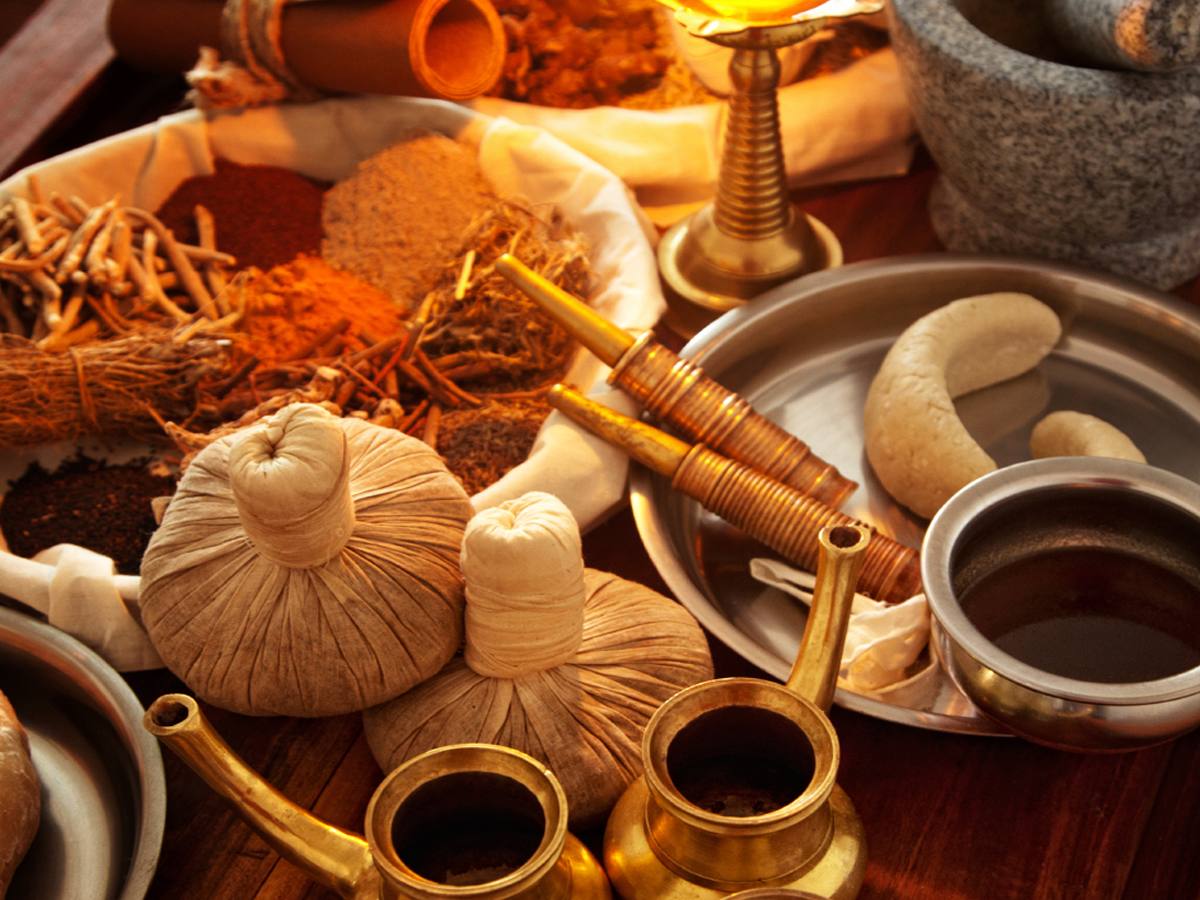
Ayurveda is the oldest science that originated in India several thousand years ago.
Ayurvedic treatment is a comprehensive approach to the therapy of emotional, psychological disorders and physical pathologies. It is used in narrow-profile health centers and specialized resort complexes, where you can combine rest and Indian non-traditional medicine.
The word “ayurveda” comes from Sanskrit (an ancient Indian language) and means “science of life”. Ayur means long life, Vida means knowledge. Ayurveda believes that everything in life is interconnected. Because of this, general health and well-being depend on achieving inner harmony. When a person is out of balance or under stress, they can develop disease. Ayurveda focuses on lifestyle interventions and natural healing methods to bring balance between the physical body, mind, spirit, and the world around a person.
- Rejuvenating programs and detox (PANCHAKARMA) – Prevention
- Programs for the treatment of hereditary and unhealthy lifestyle diseases.
- Skin Care – Available
- Acne – Curable
- Allergic skin diseases.
- Respiratory allergy.
- Skin allergy – Curable or treatable
- Alzheimer’s disease – amenable to treatment and rehabilitation
- Ankylosing spondylitis – Curable or treatable
- Anorexia (loss of appetite).
- Rheumatoid arthritis – Curable or treatable
- Gouty arthritis – Curable or treatable
- Autoimmune diseases – curable or subject to rehabilitation
- Infertility male and female – Curable except in cases of complete absence of sperm or eggs
- Insomnia – Curable or treatable
- Pain in the back.
- Bronchitis and Asthma – Curable or treatable
- Vertigo – Curable and treatable
- Chickenpox – Treatable
- Hair loss – Curable or treatable
- Miscarriage and miscarriage – Curable or treatable
- Gas and indigestion – Curable or treatable
- Gastritis – Curable or treatable
- Gonorrhea – Curable or treatable
- Hemiplegia / unilateral paresis — Rehabilitation and prevention
- Hemorrhoid / Fissure / Fistula – Curable or treatable
- Hepatitis (jaundice) – Curable or treatable
- Herpes – Curable or treatable
- Hyperlipidemia.
- Throat – Curable or treatable
- Depression is curable
- Diabetes – Treatable and sometimes curable
- Diarrhea – Curable
- Dysentery – Curable
- Dysmenorrhea (painful menstruation).
- Dyspepsia – Curable
- Gallbladder disease – Curable or treatable
- Frozen shoulder / Periarthritis.
- Constipation – Curable
- Goitre – Curable or treatable
- Hiccups – Curable
- Immune diseases – Curable or treatable
- Impotence – Curable or treatable
- Heart attack – Rehabilitation and prevention
- Sciatica is curable and can be rehabilitated
- Kidney stones – Curable or treatable
- Cataract – Treatable
- Cough – Curable
- Acidity is increased.
- Intestinal worms – Curable or treatable
- Colitis is chronic – curable or treatable
- Conjunctivitis – Curable
- Urticaria – Curable
- Bleeding gums – Curable or treatable
- Hemoptysis – Curable or treatable
- High blood pressure – Curable or treatable
- Low blood pressure (hypotension) – Curable or treatable
- Leukorrhea – Curable or treatable
- Leukoderma – Curable or treatable
- Fever – Curable or rehabilitation
- Menopause syndrome.
- Menopause – Amenable to treatment and rehabilitation
- Menstruation is painful – curable or treatable
- Irregular menstrual cycle – curable or treatable
- Flatulence – Curable
- Migraine – Curable
- Uterine fibroids are curable and can be rehabilitated
- Myopia (nearsightedness) – Curable and treatable
- Urinary system disease – Curable and treatable
- Muscular dystrophy – In most cases it is treatable, in some it is curable
- Peripheral neuritis – Curable or treatable
- Trigeminal neuralgia.
- Underweight – Curable and treatable
- Neuromuscular diseases – In most cases curable, in some – amenable to treatment
- Obesity and related diseases.
- Edema – Curable and treatable
- Osteoarthritis of the knee joint – Curable or treatable
- Parkinson’s disease – amenable to treatment and rehabilitation.
- Perimenopausal disorders – Curable or treatable
- Liver Diseases – Curable or treatable
- Dandruff – Curable
- Pyorrhea – Curable or treatable
- Digestive disorders – Curable
- Plantar fasciitis.
- Post-traumatic brain injury syndrome – Curable and amenable to rehabilitation
- Memory Loss – Curable or treatable
- Lumbar spondylosis (pain in the lower back) – Curable and rehabilitation
- Premenstrual syndrome (PMS) and colic – Curable or treatable
- Premature ejaculation – Curable or treatable
- Lumbar disc prolapse — Curable and rehabilitation
- Prostate enlarged – curable or treatable
- Prostate disease – Curable or treatable
- Psoriasis – Curable or treatable
- Cancer – Curable in the initial stages, rehabilitation and control – in the later stages.
- Multiple sclerosis – Curable and rehabilitation
- Reflux esophagitis.
- Recurrent joint dislocation – Curable or treatable
- Feeble-mindedness – Curable or treatable
- Spasms – Curable
- General weakness.
- Heart disease – Curable or treatable
- Rapid heartbeat – Curable or treatable
- Polycystic ovary syndrome is curable
- Irritable Bowel Syndrome (IBS) – Curable or treatable
- Sinusitis – Curable
- Systemic Lupus Erythematosus – Curable or treatable
- Weakness and fatigue – Curable and treatable
- Spinal canal stenosis – Curable and amenable to rehabilitation
- Stress – Curable or treatable
- Joint pains are curable
- Tendinitis – Curable
- Tonsillitis / Pharyngitis – Curable or treatable
- Anxiety – Curable
- Ligament and tendon injuries / sports injuries – Curable or treatable
- Spinal injuries – Rehabilitation
- Anxiety or Depression – Curable or treatable
- Chronic fatigue.
- Furknullosis – Curable
- Cervical spondylosis (neck pain) – Curable or treatable
- Heel spur – Curable or rehabilitated
- Cystitis – Curable
- Eczema – Curable or treatable
- Endometriosis is curable
- Eosinophilia – Curable
- Epilepsy – Curable or treatable
- Ulcer – Curable or treatable
- Peptic ulcer disease – Curable or treatable
If the patient and the Ayurvedic practitioner work as a team, the treatment can be long lasting.
Abhyangam
Classic herbal oil massage using energetic strokes to press on muscles, nerves and vital points of the body.
- Sharira abhyangam is a classic herbal oil massage for the whole body.
- Shiro Abhyangam is a herbal oil massage of the head and neck performed with rhythmic movements.
- Mukha Abhyangam is a traditional invigorating facial massage that involves the application of snehadravya (oil, ghee, etc.) using circular strokes.
- Pada Abhyangam – A stimulating foot massage that involves applying oil with specific pressure and in specific directions.
Upanaham
Takes care of deeply rooted pain. First, oil is applied, and then herbal paste is applied to the affected area. This area has steamed
Utsadanam
A thin herbal paste is massaged all over the body. Useful for sensitive and dry skin
Udvartan
Body massage using medicated dried herbal powders or pastes applied to the body in upward strokes
Dhara
First, the body is massaged, and then forced, pouring a constant flow of extracts depending on the body’s conditions from a special vessel located at a certain height.
- Kashayadhara – herbal water extracts are used.
- Dhanyamladhara – Dhanyamla (warm fermented herbal liquids)
- Shirodhara/ Takradara- Milk or buttermilk is carefully poured on the forehead
- Pizhchil / Tailadhara – Continuous streams of warm medicated herbal oils are soothingly poured over the body by two Ayurvedic therapists as they gently massage the body in perfect unison.
Sveda (steam)
- Bashpa sveda – A healing steam bath using herbal decoctions in a unique bashpa sveda yantra chamber, or a steam bath that causes profuse sweating
- Nadi sveda – Topical application of hot steam using an instrument called nadisveda yantra which induces profuse sweating
I am aware of it
Nourishing deep massage in which heated bolus bags are applied either locally or to the whole body. Depending on the nature of the health condition, bolus bags may contain chura (herbal powders), patra (assorted roasted herb leaves), jambera (lemon), or shashtik (njawara rice, a type of Indian herbal rice). Under certain conditions, massage with healing oil can be done before applying bolus bags.
External Vasthi
Localized application and storage of warm therapeutic fluids in a sealed frame on the affected area
- Greeva Vasthi – Localized external vasthi for the neck region
- Janu Vasthi – Localized external vasthi for knees
- Kati Vasti – Localized external vasti for the lower back
- Uro Vasthi – Localized external vasthi for the heart
- Shiro Vasthi – Localized external vasthi for the head
Avagaham
Sweating is caused by the patient sitting in a large bath filled with a warm medicinal liquid maintained at a constant temperature.
I’m beautiful
Gently applying a warm, thick herbal paste (a mixture of many powerful herbs, spices, leaf juices) to any affected area.
I’m baking
A long, thick layer of cotton soaked in warm medicated oil is applied to the affected area. The oil is changed periodically to keep it warm and healing. It can be applied to different parts of the body, such as the head, neck, limbs, etc.
Taladichil
The herbal paste is applied evenly over the entire head and is first covered with a plantain leaf and then with a cloth. A small hole is made in the center of the coating, and the oil is stored there. The oil and paste are removed after a certain period and a light head massage is performed.
Bandhanam
Ancient bandaging technique using healing herbal pastes or oils
Vasti
Medicinal herbal or oil climates, specially prepared and administered.
Nasyam
It is believed that the nostrils are the gateway to the head. In this treatment, herbal powders, juices and medicinal oils are injected through the nostrils.
Eye care
- Netra Lepam – A paste of various cooling herbs is applied to the eyes after washing with herbal decoction. It not only treats eye diseases, but also cools the eyes.
- Akshitharpanam – Localized application and keeping of medicated ghee or oil in a sealed frame on the eyes
- To the poor – Applying a herbal paste to the eyelids
- Akshidhara – The eyes are cleansed by pouring a liquid herbal preparation in a continuous stream over the eyes
Ear care
- Karnapoornam – Warm medicated oil and steam are applied to the ears and then massaged around the ears and jaw area
- Karna Dhoobanam – Smoke from medicinal herbs is directed into the ears to relieve hearing loss, ear infections and painful ear conditions
Agni Karma or Dahan Karma
An intensive treatment in which a unique instrument called the Shalaka Yantra is heated and applied to the affected area of the body.
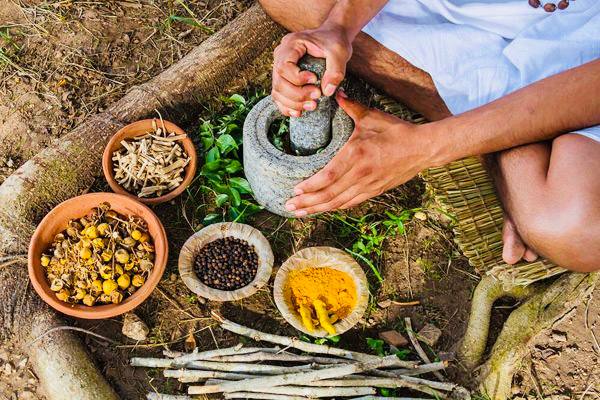
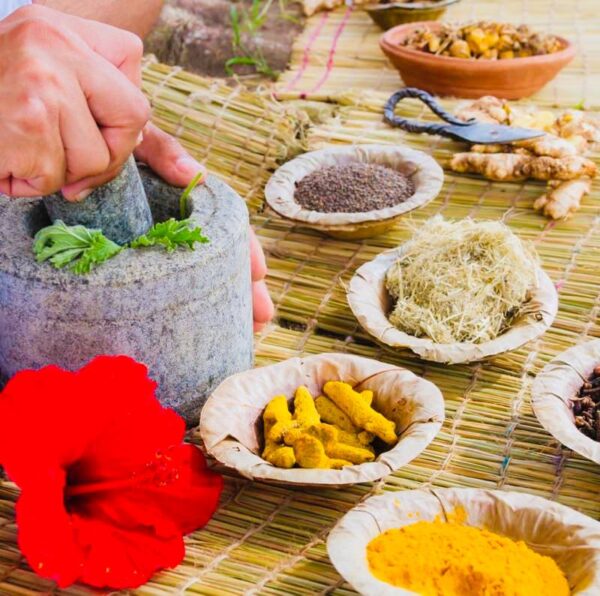
Herbs in Ayurveda:
Top 10 popular plants
About a hundred different medicinal plants are widely used in Ayurveda. However, ten “golden herbs” can be singled out, which are the most common and are part of many combined preparations. Amalaki or Amla
Indian gooseberry
The most respected and popular plant in Ayurveda. The strongest antioxidant. One amla fruit contains six times more ascorbic acid than one lemon. It has a powerful rejuvenating effect, nourishes and supports the body.
Amla balances all three doshas, but especially pitta. Strangely enough, in this case, the sour taste does not increase pitta, but on the contrary balances fire. Accordingly, amla copes with all diseases of pita dosha: improves the condition of the stomach, liver, blood, skin, eyes, stops bleeding, heals wounds and internal and external (ulcers, erosions).
- Taste: sweet, sour, spicy, bitter and astringent.
- Faith: cool
- On the contrary: sweet
Preparations that include amla: Amalaki, Triphala, Triphala Gritam, Chandraprabha Vati, Amlant.
Arjuna
Ayurvedic medicines for heart diseases are known. In India, it is said that Arjuna can cure almost any heart disease. It nourishes the heart, improves coronary blood circulation and metabolic processes in the myocardium, thins the blood, and stabilizes conditions after a heart attack.
Balances vata, reduces pitta, has a neutral effect on kapha.
In addition to being beneficial for the heart, arjuna helps strengthen bones, thereby preventing osteoporosis. And this means that after 60 years, Arjun will be useful to everyone.
- Taste: astringent and sweet
- Verya: cooling• Vipak: sharp
Preparations that include arjuna: Arjuna, Arjuna Churna
Ashwagandha
This plant is called Indian ginseng. Its name is literally translated as “horse’s groin”, although the incorrect translation is often found – “horse power”.
In classical Ayurvedic literature, there are 14 indications for taking ashwagandha, but the main ones stand out among them: nutrition of the body (especially for weakened people), effect on reproductive organs (especially in men), calming of the central nervous system.
Reduces vata and kapha.
- Taste: bitter, astringent and sweet
- Faith: cool
- On the contrary: sweet
Preparations that include ashwagandha: Ashwagandha, Ashwagandha Lehyam, Ashwagandha Rishta, Stress-Guard, Stress-Free
The gate
A highly respected plant in Ayurveda. Brahmi primarily affects the central nervous system. Improves sleep, memory, intelligence, has a positive effect on all senses. In addition to a positive effect on the mental qualities of the mind, it also has a great effect on the physical ones (blood circulation in the brain, its nutrition). Therefore, gates are often prescribed for hypertension, Alzheimer’s disease, depression, and mental retardation in children.
Cardiac activity is positively affected. Brahmi goes well with Arjun. These two plants enhance the effect of each other, so they are often taken together.
Soothes all three doshas, especially vata and pitta.
- Taste: bitter and tart
- Faith: cool
- On the contrary: sweet
Preparations that include Brahmi: Brahmi Extract, Brahmi Gritam, Brahmi Rasayana, Medha, Mentat
Guggul (myrrh, balsam tree)
A plant that stands alone in Ayurveda. It gave rise to a whole group of drugs (several dozen drugs), which we call gugguls. When combined with other herbs, guggul enhances their effects by cleansing the body.
Guggul is a tree resin. It is the strongest absorbent. Getting into the digestive tract, guggul is not absorbed, absorbs all harmful waste products and removes them naturally.
Guggul is great for balancing kapha. Accordingly, it reduces sugar and cholesterol, cleans adipose tissue, reduces weight, and treats fatty hepatosis.
People with a vata constitution should use guggul with caution, as it is slightly drying to the body. Also, in large quantities, guggul can increase pitta due to its warming properties (especially in summer).
- Taste: bitter, spicy, astringent and sweet
- Faith: faith that warms
- Vipak: sharp
Preparations that contain guggul: Triphala Guggul, Yogaraj Guggul, Amritadi Guggul, Kaishore Guggul, Medahar Guggul, Gokshuradi Guggul, Kanchnar Guggul
Huduchi (Amrita)
This medicinal plant is called the source of eternal youth. One of the worst herbs. Balances pitta and everything related to it. It is included in most of the preparations called “bitter”. The main indications are: rheumatism, dysentery, hepatitis, inflammation, fever.
Like all bitter herbs, gudi neutralizes poisons. Therefore, one of its specific purposes is any poisoning and intoxication.
- Taste: bitter and tart
- Faith: warming
- Vipak: sharp
Preparations that include Guduchi, Giloy, Panchatikta Guggul Gritam
Turmeric (Haridra)
Probably the most affordable and effective plant. It is prescribed to improve digestion, liver function and blood quality, to stop bleeding, effective bile secretion and blood thinning.
Turmeric improves the condition of the skin, so it is often included in creams and other cosmetics.
Reduces pitta and kapha, balances vata. But, because of the bitter taste, people with cotton wool should not abuse the constitution.
- Taste: bitter and tart
- Belief: Belief that warms (but still balances pitta beautifully).
- Vipak: sharp
Preparations that include turmeric: Haridra, Haridrakandam.
Neem
It is widely used in Ayurveda. A bitter herb whose main purpose is pitta balance. It has a hemostatic effect, thins the blood, has a beneficial effect on the liver, heals wounds, is used as an anti-inflammatory and antipyretic agent. If you use it for flu and colds, the disease will pass faster.
Neem is a strong blood-cleansing medicine. It has a very good effect on the skin, cleanses it, removes inflammation, so it is often included in cosmetic products.
Reduces pitta and kapha. It is used with caution in dominant vata dosha.
- Taste: bitter and tart
- Faith: cool
- Випак: острый
Preparations that include: Neem Gard, Neem Oil, Nimbaruntadi Tail.
Shatavari
The most popular herb for women’s health in Ayurveda. Literally translates as “has a hundred husbands”. Treats most gynecological problems. It has a great effect on a woman’s reproductive health, increases her ability to conceive and bear a child. This plant is often called “ginseng for women” because of its positive effect on libido. It has a very good effect on the structure of internal female organs. Often used during menopause.
Shatavari is especially useful for vata and pitta. If kapha is in balance, shatavari is also used for this dosha, but if it is out of balance, it is better not to use it.
- Taste: sweet, bitter
- Faith: cool
- On the contrary: sweet
Preparations that include shatavari: Shatavari, Shatavari Churna, Shatavari Rasayana, Shatavari Gulam.
Licorice (Yashti madhu)
Licorice is known for its healing properties in our latitudes. In Ayurveda, this plant is primarily used to balance pitta. It treats ulcers, erosions, gastritis, heartburn.
It also has an immunostimulating effect, so it is often used for colds.
Licorice is considered rasayana for the mind, it nourishes and rejuvenates it. Useful for all disorders of the central nervous system.
Reduces vata and pitta, in large quantities can increase kapha.
- Taste: sweet
- Faith: cool
- On the contrary: sweet
Preparations that include licorice: mainly used as a mono preparation, often included in cough syrups.
Bless you!
Choose your body, mind and consciousness health tour:
Ayurveda tour Panchakarma tour in India from 21 days