CHAKRAS

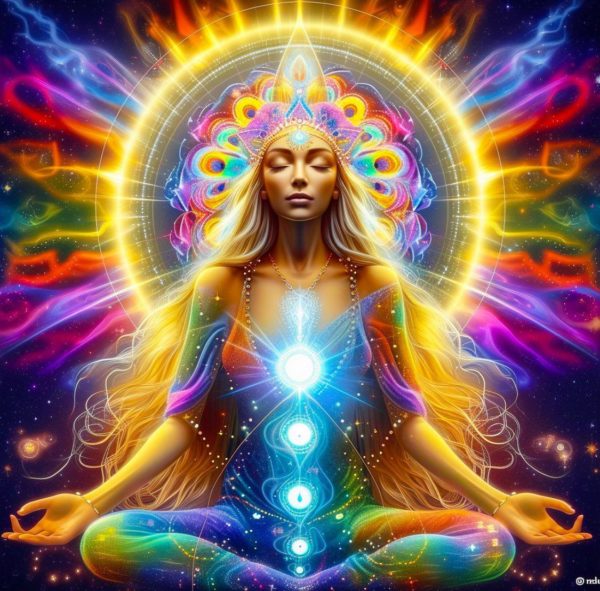
Chakras are the psycho-energetic centers of a person, which are the intersection of the channels through which the vital energy of a person flows. They are also called rotating vortices of energy passing along our spine.

Chakras can be seen as 114 central nodes of connection, or fusion, of nadis.

Nadis are channels of prana in the energy body.
These connections have the shape of a triangle. They are called chakras because they represent movement from one dimension to another, and the word “chakra” means “wheel” or “circle.” But actually they are triangles.

Of the 114 chakras, two are outside the physical body. Of the remaining 112, you can only work on 108 – then the remaining 4 will blossom as a result.

The number 108 appeared in the human system because it is significant in the formation of the solar system. The distance between the Earth and the Sun is equal to 108 diameters of the Sun. The distance between the Earth and the Moon is equal to 108 diameters of the Moon. The diameter of the Sun is 108 diameters of the Earth. Therefore, the number 108 plays a role in various spiritual practices.
These 112 chakras are organized into 7 dimensions, each of which contains 16 aspects. Instead of delving into 112 (which is too much for most people),
it was only about the 7 chakras corresponding to the 7 dimensions. These 7 dimensions are called chakras, which, in turn, are the basis of 7 schools of Yoga.

From 112 to 7 chakras

For a full-fledged physical and social life, a person needs 21 activated chakras. These 21 chakras are also associated with the number 7.
Since energy is characterized by three dimensions of Pingala, Ida and Sushumna (central energy channels), there are 7 aggregates, in each of which 3 chakras function as a single unit.

Therefore, if the 21st chakra is functioning, you are physically, psychologically, and emotionally complete.
But in terms of energy, you are disabled.

If we want the other dimensions to become a living reality, the remaining chakras must also be activated.

The mind must be full of energy. Otherwise, dormant intelligence is not intelligence. A computer that does not turn on is still a piece of stone. It’s the same with the human body. It’s a supercomputer, but most people only keep it running at a survival level.
If we want something more to happen, it must be activated.
Hatha yoga is a discipline that activates the entire human system.
Unfortunately, people think that Hatha yoga is just exercise or some kind of health system. Yoga has never focused on healing anything. We consider how to make the human system complete. If the system is complete, everything else will also be fine. Something will be activated, which in any case will start the healing processes by itself.

Location and names of the 7 chakras

The 7 main chakras are known as:

  1. Muladhara (located in the perineum – in the space between the anus and the genital organ),
  2. Swadhishthana (located just above the genital organ),
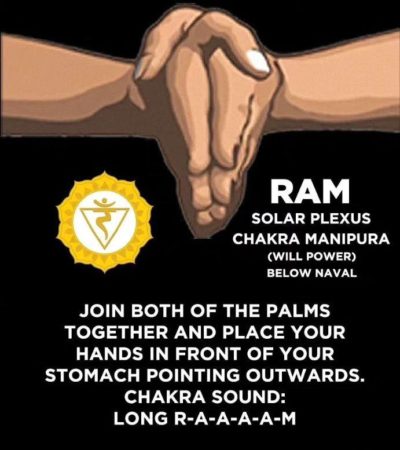
  3. Manipuraka (just below the navel),
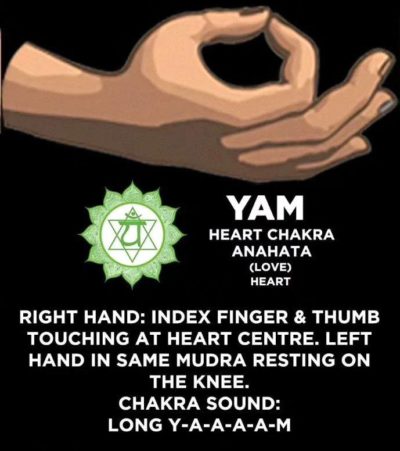
  4. Anahata (right below the junction of the ribs of the chest),
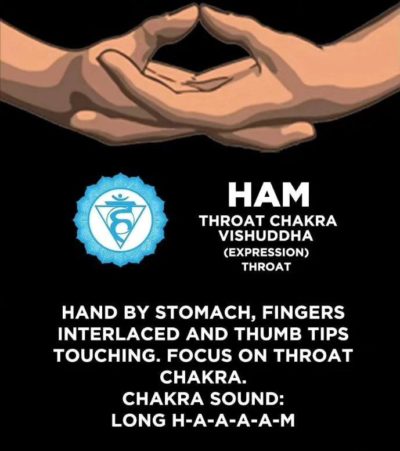
  5. Vishuddhi (in the area of ​​the dimple at the base of the throat),
  6. Agna (between the eyebrows),
  7. Sahasrara (also known as Brahmarandra, which is on the top of the head, where a baby has a soft spot at birth).

This topic can be discussed in terms of the lower and upper energy centers, but this formulation is often misunderstood. It is like comparing the foundation of a building with its roof. The roof is absorbed into the foundation. The foundation plays a major role for the building than the roof. The quality, stability, safety and longevity of a building depends more on the foundation than on the roof. But from the point of view of language formulation, the roof is higher, the foundation is lower.

Subtle aspects of the 7 chakras of the body
Chakras find their embodiment in the body. But they also have subtler manifestations called “kshetras”.

Kshetra means abode. You can be in your office but live somewhere else. Similarly, there are external kshetras called bahya kshetras, and there are internal kshetras called antar kshetras.

Chakras have more than one dimension. One is physical existence, but chakras also have a spiritual dimension. This means that the chakras can be completely transformed.

CHAKRA SYMBOLISM

The first five main chakras correspond to fire, water, earth, ether and air. A yantra refers to the physical form of a chakra that has the petals of a lotus flower uniquely representing each chakra, surrounding them with a certain number of petals. A yantra, also known as a ‘machine’, helps depict the functions of the chakras.
The colors support the identity of each chakra symbol – the chakra system is organized by the colors of the rainbow, ascending from the spine.
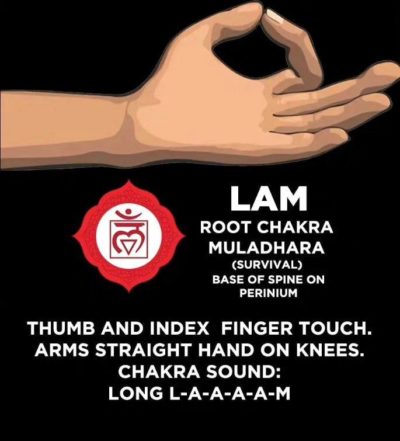
MEANING OF THE ROOT CHAKRA SYMBOL

The meaning of the root chakra symbol as the first chakra is complex and associated with the earth element. It appears as an alchemical symbol of the earth, enhancing the grounding energy and power of Mudhalara.

Four Petaled Lotus: The root chakra lotus symbolizes the four areas of consciousness through its four petals: Manas (mind), Buddhi (intellect), Chitta (consciousness) and Ahamkara (ego).

Square: The square represents basic life energy, rigidity and stability. The number four is repeated here again as a symbol of the four corners, representing the basic life energy.

Inverted Triangle: The lotus flower yantra has a downward pointing arrow which also looks like an inverted triangle. Each of the three points has a meaning associated with consciousness, experience and the three deities. It is an elementary symbol of the earth, projecting the energy of grounding.

Red Color: The color red represents how the root chakra means strength, it means safety, security and control. It also symbolizes the birth of human consciousness.

Hematite: This is a reddish-black mineral that nourishes the human roots.

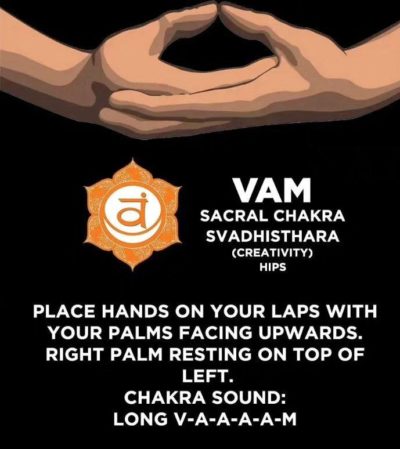
MEANING OF THE SACRAL CHAKRA SYMBOL

The Sacral Chakra, also known as Swadhishthana, is our central chakra. It is associated with water, personifying fluidity, movement and cheerfulness.

Six-petalled lotus: The lotus of the sacral chakra consists of six petals. The petals of the lotus flower symbolize overcoming anger, jealousy, cruelty, hatred, pride and other negative emotions and qualities. Thanks to this, a person can accept his divine qualities.

Circles: The yantra is a circle representing the element of water and the moon, symbolizing the cycle of birth, death and rebirth.

Crescent Moon: The crescent moon symbolizes cycles, endless change, chaos and constant movement.

Orange: Orange represents the sacral chakra. As a warm and exciting color, it demonstrates the influence of the chakra on sexuality, intimacy and creativity of people.

Tiger’s Eye: This orange stone helps align the sacral chakra and helps you gain control over your life.

MEANING OF THE SOLAR PLEXUS CHAKRA SYMBOL

The meaning of the solar plexus symbol is related to the element of fire and the sun. It represents the energy and personal power of a person.

Ten Petaled Lotus: The ten petals of the solar plexus chakra represent the pranas that exist within us: Prana, Apana, Udana, Vyana, Samana, Naga, Kurma, Devadatta, Krikala and Dhananjai.

Inverted Triangle: The inverted triangle is pushing energy down through the energy centers to obstruct the movement of the Kundalini.

Yellow: The color yellow symbolizes the ability to tap into our inner sun or light, which correlates with our overall self-esteem and self-respect.

Amber: Amber is an effective stone for reducing feelings of shame and self-doubt and building self-confidence.

MEANING OF THE HEART CHAKRA SYMBOL

Anahata is the Sanskrit word for the heart chakra, meaning undamaged, still, or unbeaten. It is associated with the element of air and is necessary to connect the three basic chakras and the three higher chakras.

Twelve Petaled Lotus: The twelve petals of the heart chakra represent the twelve divine qualities of the heart: love, bliss, harmony, understanding, compassion, forgiveness, peace, clarity, compassion, purity, compassion and forgiveness.

Hexagonal Star: The hexagonal star represents masculine and feminine energies coming together in the shape of a star depicted as two intersecting triangles, one pointing up and the other down. The interaction of masculine and feminine energies creates the shape of a star.

Hexagram: Two triangles form and represent a hexagram, illustrating how the heart chakra is central to the combination of the energy system.

Green: Green represents the ability to give, receive and heal, allowing us to let go of pain and regret.

Rose Quartz: This master stone correlates deeply with heart chakra healing and is the only exception for crystal color coordination.

MEANING OF THE THROAT CHAKRA SYMBOL

The throat chakra, or Vishuddha, is closely related to our ability to express ourselves and communicate. A blocked throat chakra affects our ability to be authentic. It represents the element ether, which is space that carries the essence of emptiness.

Sixteen Petal Lotus: The sixteen petals are associated with the sixteen vowels of Sanskrit. Vowel sounds are light and relaxed, maintaining an airy quality to speech and communication.

Inverted Triangle: The inverted triangle symbolizes the energy of the three lower chakras, which concentrates and rotates upwards to the higher chakras.

Circle: This chakra symbol includes a powerful white circle. The circle represents the full moon – this stage of the lunar cycle symbolizes release, rest and letting go. Through this we can have knowledge and purity.

Blue: The color blue promotes healing communication, symbolizing calmness, truth, trust and intelligence.

Blue Lace Agate This dark blue stone circulates effectively in the energy center.

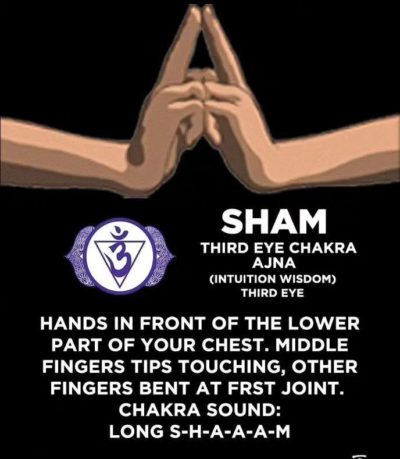
THE MEANING OF THE THIRD EYE CHAKRA SYMBOL

The third eye chakra, or Ajna, is the center of gravity and wisdom. It does not depict a certain element, like the previous chakras. Some say that it symbolizes light, others – that it belongs to the general comprehensiveness.

Two Petaled Lotus: The third eye chakra yantra is a circle with two petals representing seed sounds. And spirituality between I and God.

Inverted Triangle: The inverted triangle symbolizes the energy channel that represents our consciousness and higher self. It is the awakening of the pineal gland.

Indigo or purple: The third eye chakra is associated with dark blue and purple hues. These shades are mystical, represent the highest wisdom and support our connection with intuition.

Amethyst and lapis lazuli: Amethyst has rich purple tones and lapis lazuli has a deep blue color, making them ideal for the third eye chakra.

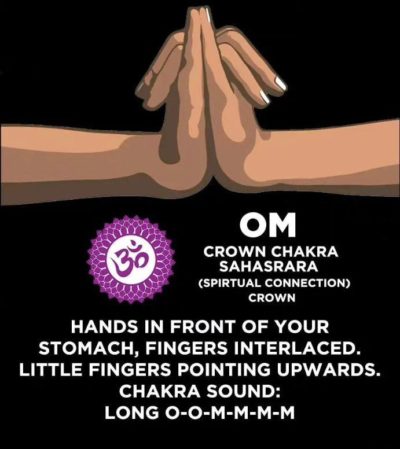
MEANING OF THE CROWN CHAKRA SYMBOL

The crown chakra, or Sahasrara, is the last of the seven chakras. Its natural element is associated with spiritual connection and transformation.

Thousand Petaled Lotus: It symbolizes our connection with the divine and oneness with the universe. The lotus flower symbolizes prosperity.

Circle: The circle has a universal representation of an infinite and cyclical nature – it is infinite, as is the nature of energy. It is perceived as a full moon and is associated with our unity with ourselves and others.

Violet/White: The last chakra has two colors – shades of purple with glowing white. Bright colors radiate through the top of the head, reflecting spirituality and enlightenment.

Clear Quartz: Clear quartz can help open minded individuals connect with their higher powers.